
Former Travel Writers Who Quit Over AI Test It on a Trip Across France

Food & Drink Destinations
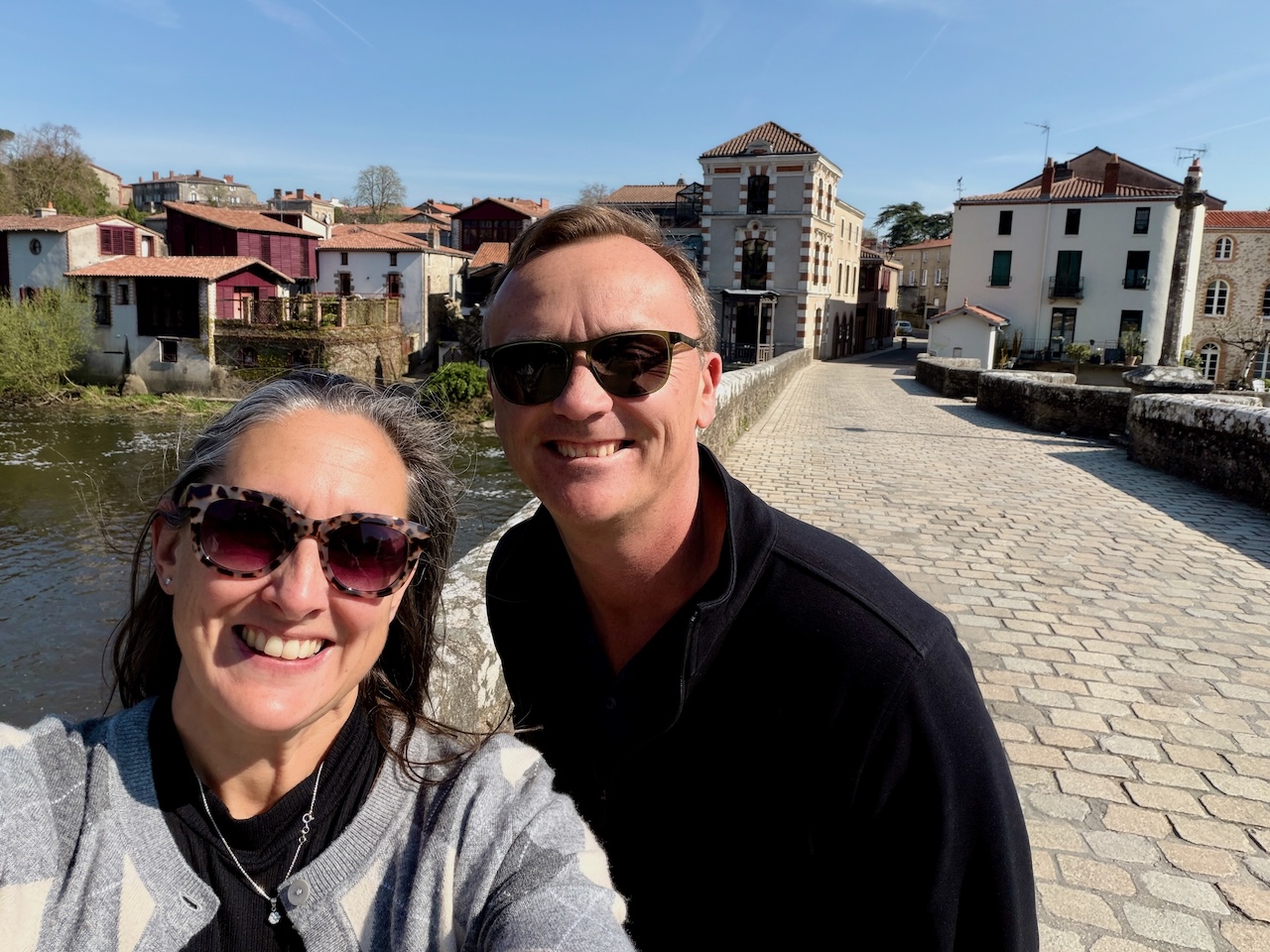
Amber & Eric Hoffman in Clisson, France
The team behind Food & Drink Destinations let Gemini and Perplexity plan a full France trip, finding AI about 80% accurate — great on big calls, weak on details
BOULDER, CO, UNITED STATES, June 4, 2026 /EINPresswire.com/ -- Roughly three years after stepping away from travel writing because of artificial intelligence, the team behind the food and travel publication Food & Drink Destinations decided to confront the technology directly: they let AI plan an entire trip across France, then graded the results.
Their verdict? About 80% accurate — excellent at the big decisions, and consistently unreliable on the details.
Amber and Eric Hoffman spent more than a decade as food and travel writers, working with tourism boards and visiting well over a hundred wineries across Europe. Around 2022 and 2023, as AI-generated content began flooding search results, they left the industry. The recent France trip was an experiment to answer a question they couldn't stop asking: what can AI actually do for travelers now, and what still requires a human?
Rather than asking AI to "plan a trip," the Hoffmans treated the tools — Gemini and Perplexity, used in parallel — as conversation partners, working through roughly a hundred queries about their travel history, preferences, and constraints. Both tools independently recommended the same route through France: Bordeaux, the coastal town of La Rochelle, and Nantes.
Where the AI excelled was the big picture. It selected a country the couple didn't already know intimately, sequenced three cities and a workable train route, and surfaced destinations the Hoffmans say they never would have found on their own — including La Rochelle, a port town that not one of their well-traveled friends, or even the French chefs they know, had ever visited. Its restaurant recommendations landed roughly 80% of the time, and it directed them to a Bordeaux food market they returned to three days in a row.
Where it fell short was everything granular. Restaurant hours and menu details were frequently wrong. The tools couldn't grasp nuance — when asked to replicate the eat-in market experience of Bordeaux in other cities, the recommendations missed the mark. In one case, the AI suggested a wine tasting that did not exist.
The Hoffmans frame the takeaway as a clear split: AI is now a capable travel planner for the structure of a trip, but travelers still need to verify the details themselves. They also see a larger shift for the travel content industry — that AI will absorb logistics and listicles, while first-hand storytelling and lived experience become more valuable, not less.
The full account of the experiment, including what the AI got right and wrong across Bordeaux, La Rochelle, Nantes, and a day trip to the village of Clisson, is published on Food & Drink Destinations.
Food & Drink Destinations is a food and travel publication featuring first-hand culinary guides across Asia and Europe, written by experienced culinary travelers.
Amber S. Hoffman, who writes about AI in business and consults with companies on AI visibility, brought that professional lens to the experiment — testing not just whether AI could plan a trip, but how well it surfaces and recommends real-world hospitality businesses.
Amber S. Hoffman
Food & Drink Destinations
email us here
Visit us on social media:
Instagram
Facebook
Legal Disclaimer:
EIN Presswire provides this news content "as is" without warranty of any kind. We do not accept any responsibility or liability for the accuracy, content, images, videos, licenses, completeness, legality, or reliability of the information contained in this article. If you have any complaints or copyright issues related to this article, kindly contact the author above.
